Vistas de página en total

martes, 1 de marzo de 2016

Respiratory system
Respiratory diseases
 Bronchitis:
The bronchitis is irritation and inflammation of the bronchi causing narrowing of the airways.

Which in turn produces a breathing difficulties and excessive accumulations of mucus.
 
Emphysema:

Emphysema is a lung disease like bronchitis, nevertheless, emphysema involves damage to the air sacs of the lungs and, as a result of this impact and the body does not get the oxygen it needs.


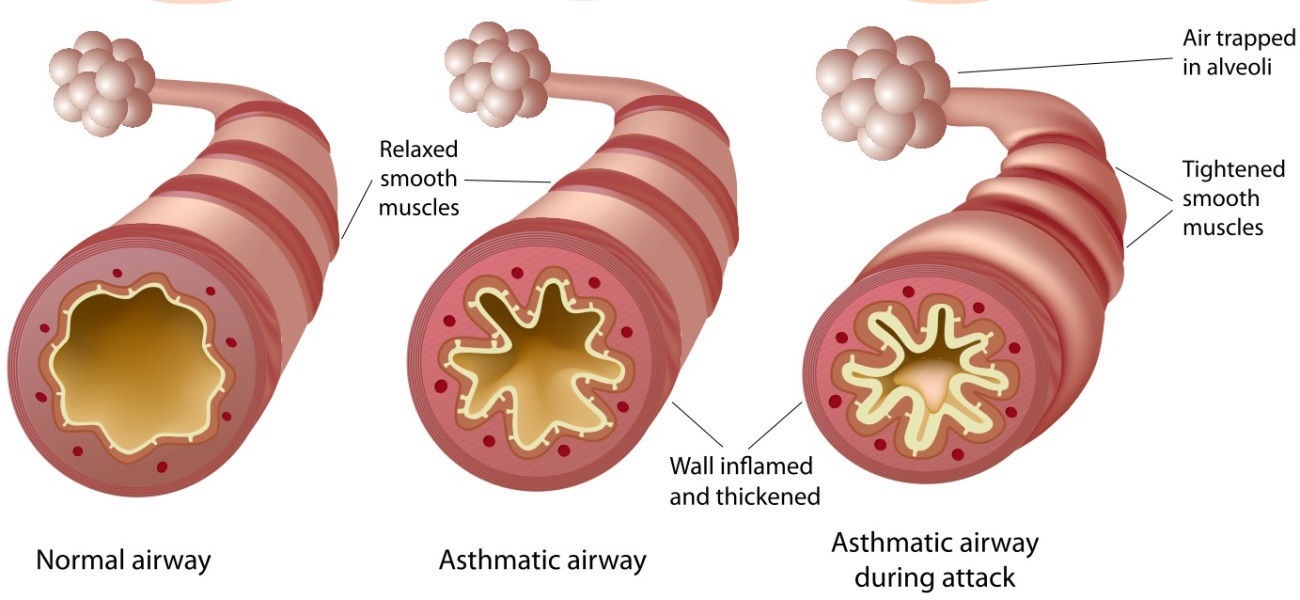
Asthma:

Bronchial asthma is a chronic disease: the bronchi become inflamed and hamper the work of the rest of the respiratory system. Its symptoms range from insomnia, fatigue, difficulty breathing and decreased daily activities.


The effects of Tabaco


Conclusions of the activity about breathe/ heartrate and exercise:

During the exercise, the heart must beat faster to eliminate excess carbon dioxide and increase the supply of oxygen in the body. The signalling process stimulates the heart to beat faster during exercise, with inputs coming from many parts of the body.

I think that exercising does affect your pulse and will increase the amount of heartbeats because when you exercise your body has to pump more blood. This is because when you exercise, the cells that are in your muscles need more energy to move. Your muscles get this energy from respiration. This travels in the blood so if your muscles need more oxygen and glucose, they get it from the blood.
Also when you have did a lot of exercise you can feel your pulse rate in your neck beating really fast. I think that my pulse rate will take about 4, 5 or 6 minutes for it to return back to normality.
Make sure that all the experiments you do on measuring your pulse rate are fair (don’t eat before the experiment or do not do exercise).

1.    - First, The time in which you do the experiment should be kept the same.
2.    - Do the same type of exercise each time.
3.    - Wait until your pulse rate returns to normal before doing the exercise again.
4.    - Do you the experiment at the morning when you wake up. This is a whole lot easier than doing it in the afternoon because if you want to do this experiment twice you have to eat and rest the same amount which you did the day before.

Method:
During the morning wake up about 25 minutes earlier then you usually do and measure your pulse rate for one minute. Then do 10 jumping (1 for 6 sec.) in 1 min.  Repeat what you just did again the day after.

 See if your pulse rate is similar to the first test you did and if it is not, try the experiment again the day after because you have obviously not made it a fair test. I will repeat this experiment to make it more accurate. 
martes, 23 de febrero de 2016

Respiratory System

Respiratory process:

You need to breathe to live. When you breathe interesting things happen in your body:

When the air enters through your nasal cavity, it passes to hairs and this heat the air.
Then the air goes from the nose to the trachea. After that the oxygen arrives to the lungs through two tubes called bronchi. Enters into the lungs through small tubes called bronchioles. Passes into the blood with the alveoli.


martes, 1 de diciembre de 2015

Curiosities of Digestive System

Hello and this are the curiosities of the digestive system.


1. An adult esophagus ranges from 10 to 14 inches in length, and 1 inch in diameter.
2. We make 1 to 3 pints of saliva a day.
3. Muscles contract in waves to move the food down the oesophagus. This means that food would get to a person's stomach, even if they were standing on their head
4. It takes your mouth, esophagus, stomach, small intestine, large intestine, gallbladder, pancreas and liver just to digest a glass of milk..
5. An adults stomach can hold approximately 1.5 liters of material.
6. The average male will eat about 50 tons of food during his lifetime in order to sustain a weight of 150 pounds.
7. Within the colon, a typical person harbors more than 400 distinct species of bacteria
8. The liver is the largest organ in the body and performs more than 500 functions.
9. The small intestine (pronounced in-test-in) is a long tube about 1 and a half to 2 inches around, and about 22 feet long.
10. A full grown horse?? Their coiled up intestines are 89 feet long.
11. Food stays in your stomach for 2 to 3 hours.